Playing with confidence / GUIDE 21
Watching a Seeker Without Panicking at Every Footstep
You are hidden, a seeker enters the room, and your first instinct is to run. Before leaving, watch what the character is actually doing. Entering your room does not automatically mean it is checking your furniture. A calmer reading of its movement can prevent an unnecessary escape into the open. Start learning this with one seeker, where you can follow the visible activity without trying to track several opponents at once.
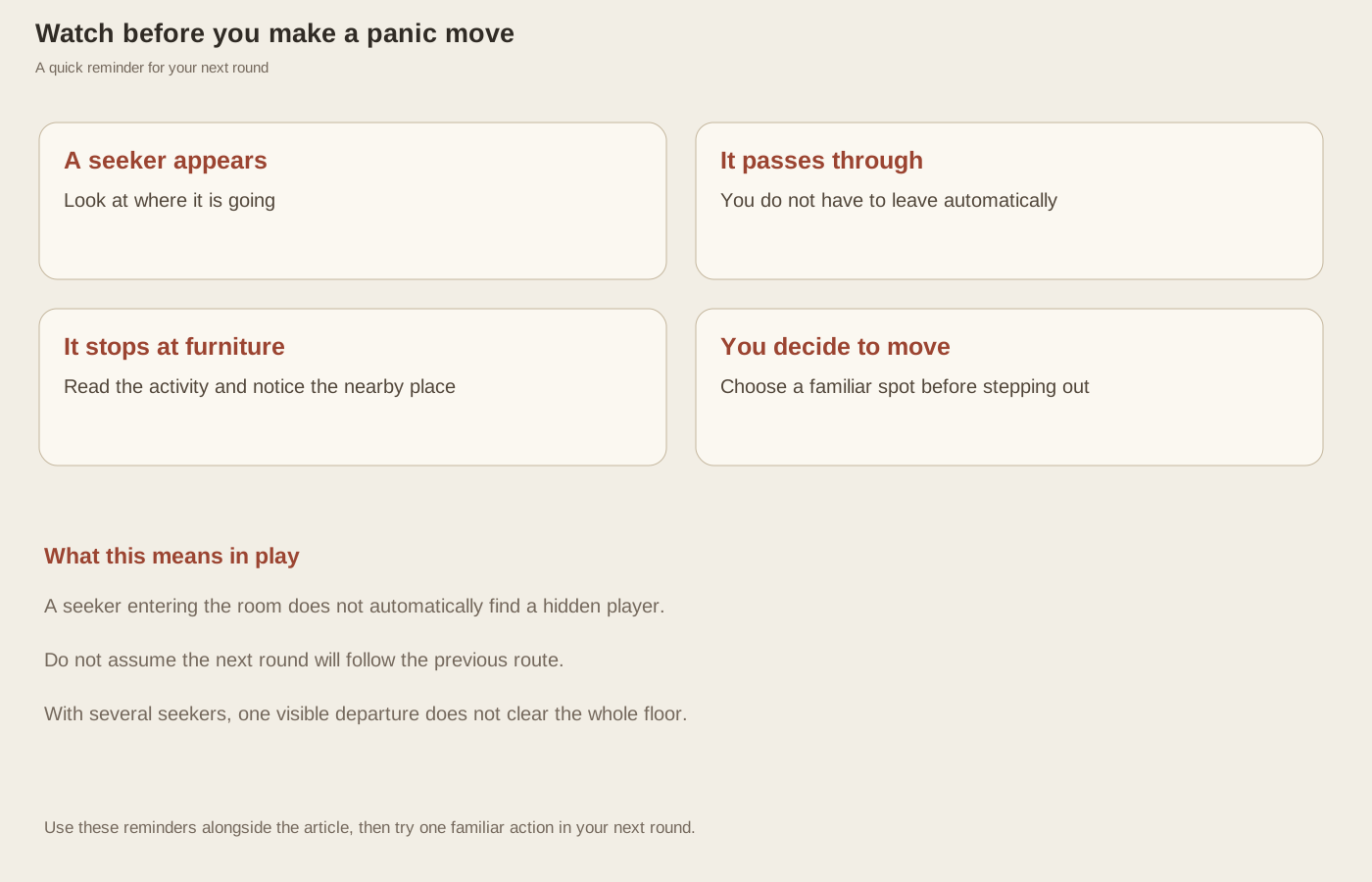
Separate passing through from searching your spot
A seeker can walk through your room on the way to another hiding place. If you are properly hidden, walking nearby does not automatically reveal you. Keep watching rather than assuming that a character appearing on screen means you must move immediately. Your Hidden status is the useful confirmation that you entered furniture correctly before the visitor arrived.
When a seeker stops near furniture and shows “Checking…,” pay attention to the place beside it. That is a more important sign than simply seeing movement in the corridor. The message does not give you a comfortable countdown to follow, so avoid treating the first instant you notice it as the beginning of a guaranteed escape window. You may have looked over after the check was already under way.
Expect the next round to look different
Seekers do not always visit rooms in the same order. A character that went straight upstairs last round may begin downstairs next time. Use your map knowledge to recognize its current direction rather than memorizing one previous trip as a permanent routine. The more familiar the entrances become, the easier it is to tell whether a seeker is entering your room or crossing toward another one.
A place that was checked once can be checked again. Do not treat a completed search as a promise that furniture is safe for the rest of the round. With several seekers, another character may inspect the same place later too. An observed check is useful information about a recent event, but your next decision still needs to account for the people and furniture around you now.
Understand why leaving can be dangerous
While hidden, you are discovered when a seeker checks the place you occupy. Once you leave, a nearby checking seeker can also catch you in the open. This makes a hurried departure risky even when the destination looks close. You need to step out, travel through clear floor, reach another real hiding place, and press F again before you are hidden there.
If you decide to move, choose the destination first. A familiar cabinet with a clear approach is more useful than a vague plan to get “somewhere else.” Practice the journey during preparation so you know which doorway to use and what the next prompt will say. That lets an active-search decision depend on what you see, instead of also forcing you to learn an unfamiliar route under pressure.
Observe more cautiously with several seekers
Your camera shows only part of the current floor. A quiet room does not tell you where every seeker is, and going upstairs does not prevent them from following routes to that floor. If one visible seeker leaves, remember that other opponents may still be elsewhere. Avoid declaring a whole floor safe because the character you were watching has just walked out of view.
For a useful learning round, hide early and make your first goal observation rather than constant movement. Notice one approach, one pause, or one floor change. If you lose, read whether you were found inside a spot or caught outside. That tells you more than the feeling that the AI “knew everything.” Over time, you can make fewer panic moves and more deliberate choices, while still accepting that no single hiding plan guarantees the same outcome in every round.