Getting started / GUIDE 04
A Practical Plan for Your First Seeker Win
A seeker win requires finding every AI hider, not simply encountering a character somewhere in the villa. Hiders occupy a random selection of the twelve hiding places and remain there for that round. Your task is a timed inspection route. Begin with one hider to learn the route and the interaction prompts, then increase the count after you can visit both floors without losing your place.
Choose a small and measurable objective
Select “I'll seek” and set one AI hider. This gives you a clear success condition: one correct F interaction before the 120-second timer expires. The game does not provide a preparation period in seeker mode. Once you start, move with a purpose. Spend your first few seconds entering a room rather than studying every decorative object in the house.
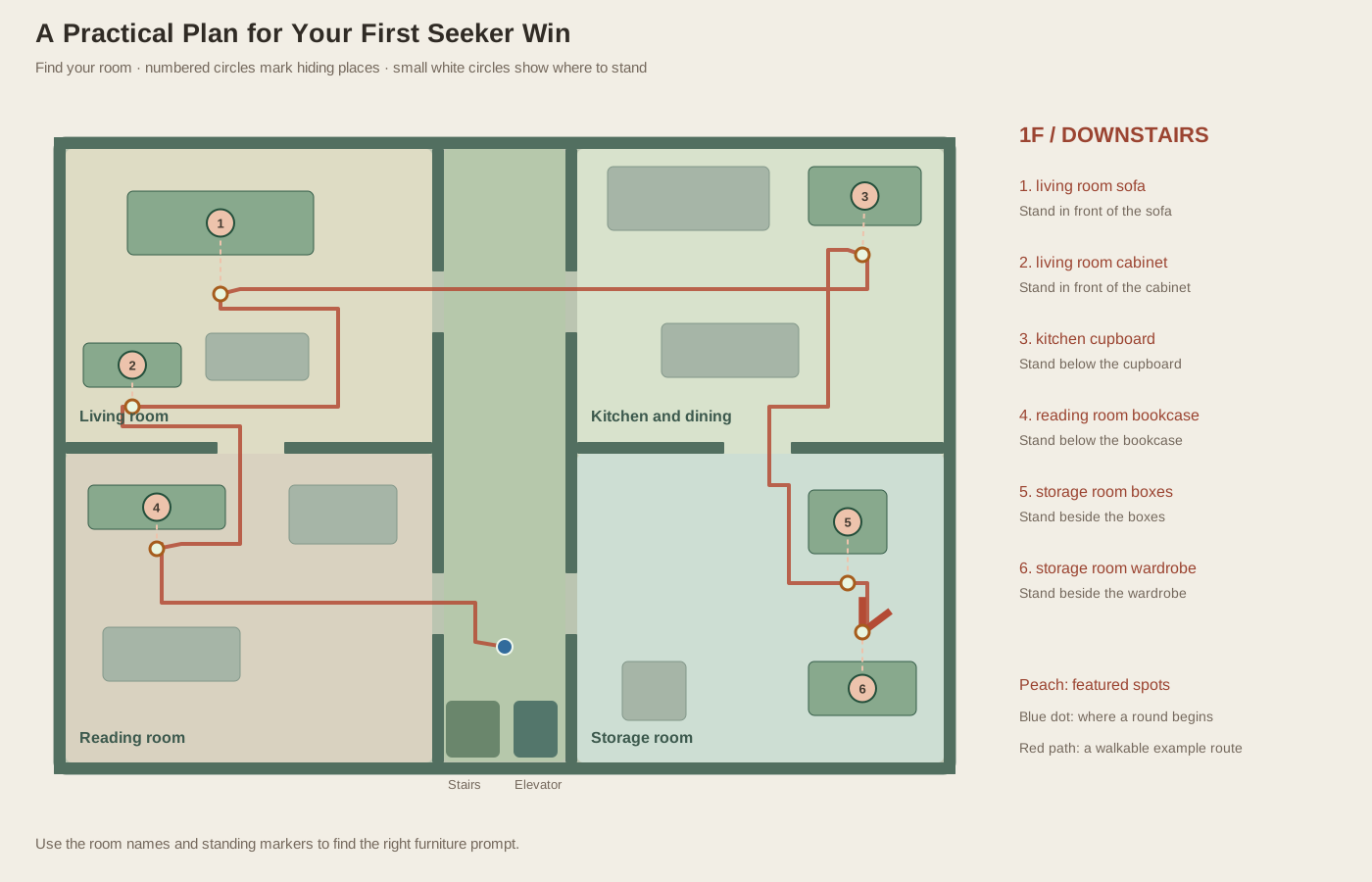
An efficient search depends on distinguishing usable spots from scenery. Downstairs, the living room has two spots, the kitchen has one, the reading room has one, and the storage room has two. Upstairs, the bedroom has two, the study has one, the dressing room has two, and the bathroom has one. These totals account for all twelve spots. A table, bath, desk, or extra sofa can still block your route without holding a hider.
Search complete rooms
Start with a room you recognize and check every usable place in it before leaving. In the living room, inspect the sofa and the cabinet. Use the prompts to confirm each target rather than pressing F while standing vaguely near a large object. Empty searches mark the corresponding place, which gives you a visual record. Leaving a room with one unchecked spot creates unnecessary uncertainty later in the round.
Next connect your room visits through real door openings. The illustration shows one possible downstairs circuit, not a route the game forces you to follow. You can reverse it, begin on the right side, or move upstairs sooner. What matters is that your sequence is deliberate and that you do not spend time rechecking already cleared furniture. AI hiders do not move in this mode, so a completed empty search stays useful information for the rest of that round.
Make one planned floor change
When your downstairs circuit is complete, return to the bottom corridor. Use the elevator with F or walk onto the stairs. After arrival, confirm the floor label before entering the next room. The upstairs layout resembles the downstairs structure, but its furniture and hiding places differ. A familiar corridor does not mean you have returned to the original floor.
Apply the same room-completion rule upstairs. The bedroom bed and wardrobe are separate checks. The study bookcase is the only study spot. The dressing room wardrobe and chest are separate checks, and the bathroom cabinet is the only bathroom spot. If you search everything methodically, the round must end in a discovery before you need to repeat a spot, provided you finish the necessary travel and checks before time runs out.
Learn from a loss without inventing clues
If the timer expires, read the remaining locations listed in the result. They identify the hider positions for the round that just ended. Use them to identify a room you skipped, an object you mistook for decoration, or a floor you never visited. They do not predict the next round, because starting again assigns fresh random spots.
Do not use avatar choice, furniture color, footsteps, or a particular room name as a hidden clue to the answer. The current rules do not connect those details to hider assignment. Your reliable information comes from explicit searches and the found counter. For a useful improvement target, aim to finish a full downstairs sweep without revisiting a checked place. Then aim to do the same upstairs. Combining those two skills is more dependable than hoping to recognize a lucky hiding pattern.